
On August 28, 2016, Latin music lost Alberto Aguilera Valadez, the artist the world knew as Juan Gabriel. Yet ten years later, his presence remains vividly alive—in the voices that continue to sing his songs, in the families who find comfort in his lyrics, in the stages that still echo his name, and in a popular culture that elevated him to legend.
To speak of Juan Gabriel is to speak of emotion without disguise. He was a composer, singer, producer, performer, stage phenomenon, and symbol of authenticity. His work crossed genres, social classes, countries, and generations. Few artists have accomplished something so rare: transforming a deeply personal song into a collective memory.
From Alberto Aguilera Valadez to Juan Gabriel
Born on January 7, 1950, in Parácuaro, Michoacán, Juan Gabriel built his destiny out of adversity. His was not the story of an artist manufactured by the industry, but of a creator who found in music a way to survive, express himself, and transform pain into beauty.
Ciudad Juárez profoundly shaped his artistic identity. From that connection came the nickname that would follow him forever: El Divo de Juárez. More than a title, it was a statement of style. Juan Gabriel belonged to the people, but also to spectacle; to Mexican tradition, but also to modernity; to intimate emotion, but also to the grandeur of the stage.
A Composer of Universal Emotions
Juan Gabriel’s greatness cannot be explained by his voice or stage presence alone, but by his extraordinary ability to write songs that seemed to speak directly to the hearts of millions. His catalog includes anthems such as “Amor eterno,” “Querida,” “Hasta que te conocí,” “No tengo dinero,” “Abrázame muy fuerte,” “El Noa Noa,” “Se me olvidó otra vez,” and “Así fue”—songs that have become essential to the Latin American songbook.
His songs possessed a rare quality: they could be deeply theatrical and, at the same time, unmistakably honest. Juan Gabriel sang of love, abandonment, nostalgia, joy, and pride with an intensity that never felt artificial. For many, listening to one of his songs meant remembering a story of their own.
The Stage as a Territory of Freedom
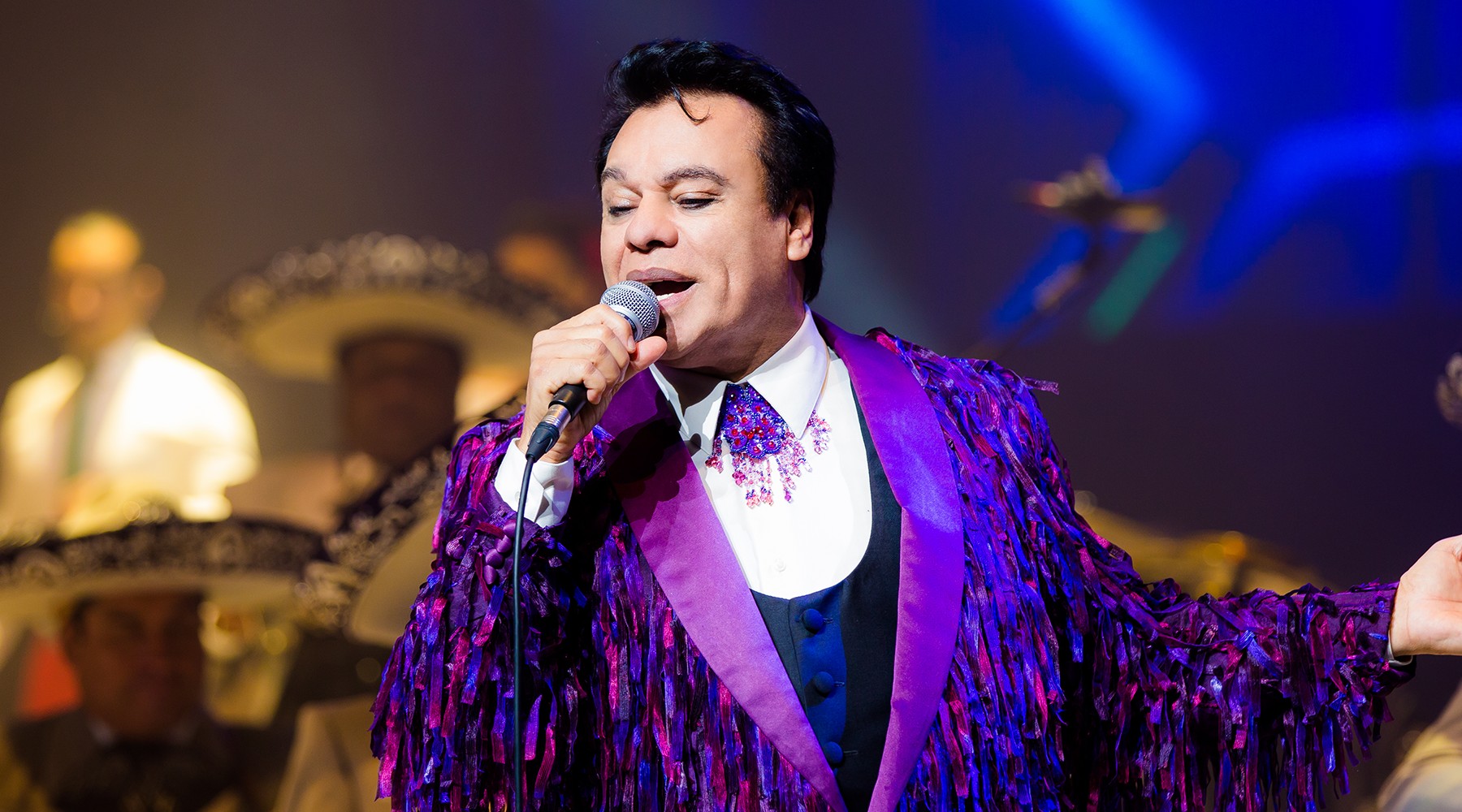
Juan Gabriel did not simply perform songs—he inhabited them. His way of dancing, his gestures, his shimmering suits, his dramatic pauses, and his connection with the audience turned every performance into an emotional experience. He broke molds in an industry that often demanded rigidity, doing so with elegance, charisma, and an artistic confidence that remains impossible to imitate.
Within him lived mariachi, balladry, pop, ranchera, bolero, and popular song. That fusion made him accessible to widely different audiences and allowed him to become a cultural bridge across generations. Parents, children, and grandparents could sing the same Juan Gabriel song together, each from their own emotional place.
A Legacy That Continues to Grow
Over nearly five decades, Juan Gabriel created an immense body of work and left a profound mark on Spanish-language music. His compositions have been interpreted by major artists, and his influence continues to be felt among contemporary performers who recognize him as a source of creative, vocal, and emotional inspiration.
The Latin Recording Academy named him Person of the Year in 2009, honoring not only his artistic career but also his social and cultural contributions. For the institution, his legacy extended far beyond a collection of songs: Juan Gabriel had composed a kind of popular philosophy, a way of understanding life through feeling, memory, and celebration.
The Enduring Power of a Latin Icon
Ten years after his passing, Juan Gabriel does not belong only to the past. His music continues to circulate across digital platforms, television tributes, concerts, films, family gatherings, and popular celebrations. His voice still appears wherever there is love, farewell, joy, grief, or gratitude.
That is perhaps the highest triumph of an artist: to remain alive in people’s emotions. Juan Gabriel did not leave behind only albums, awards, and records; he left phrases that became consolation, melodies that became ritual, and songs that continue to find new listeners with every generation.
A Voice That Never Fades
Juan Gabriel was more than a famous singer. He was an artist who transformed vulnerability into strength, theatricality into language, and popular music into emotional heritage. His legacy endures because it was born from something profoundly human: the need to love, remember, sing, and feel accompanied.
Ten years after his death, El Divo de Juárez continues to sing in the memory of millions. And as long as one of his songs keeps playing in a home, at a celebration, on a stage, or in someone’s heart, Juan Gabriel will remain amor eterno.